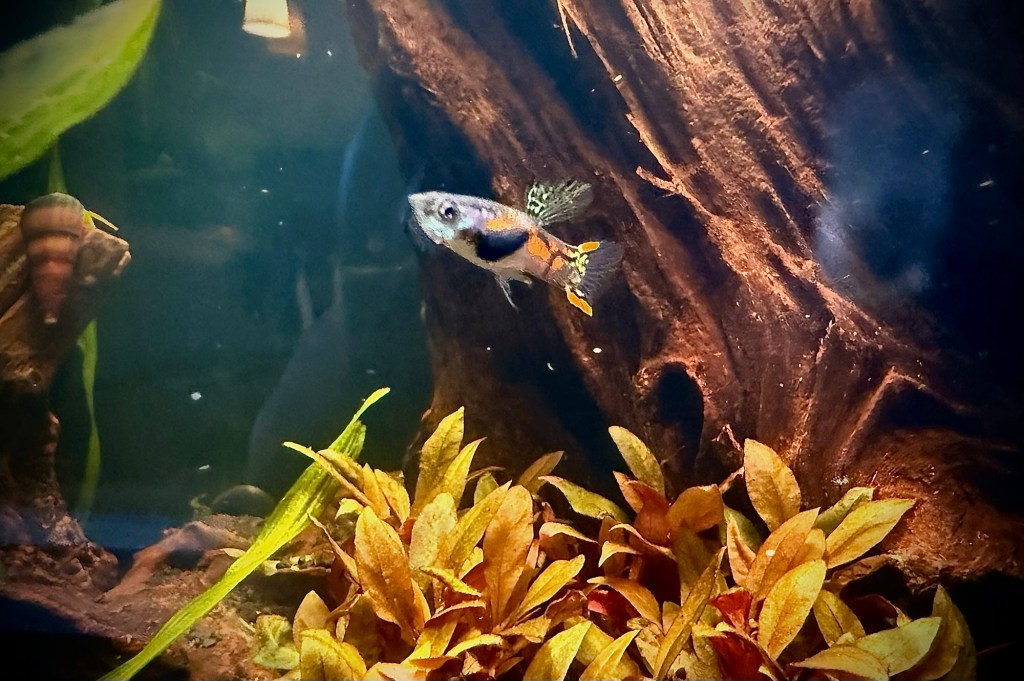
There are moments in aquarium keeping that feel much bigger than they probably look from the outside. A tiny fish, barely more than a moving line in the water, can suddenly become the most exciting thing in the whole room. That is exactly what happened in my aquarium this week: the first Endler baby appeared.
The aquarium itself is still very new, less than a week old, so I did not expect anything quite so dramatic to happen this soon. But there it was, a tiny Endler fry, already swimming bravely among the plants. I had suspected that the two females might be pregnant when I first looked at them, but seeing the baby actually out in the aquarium was still a wonderful surprise.
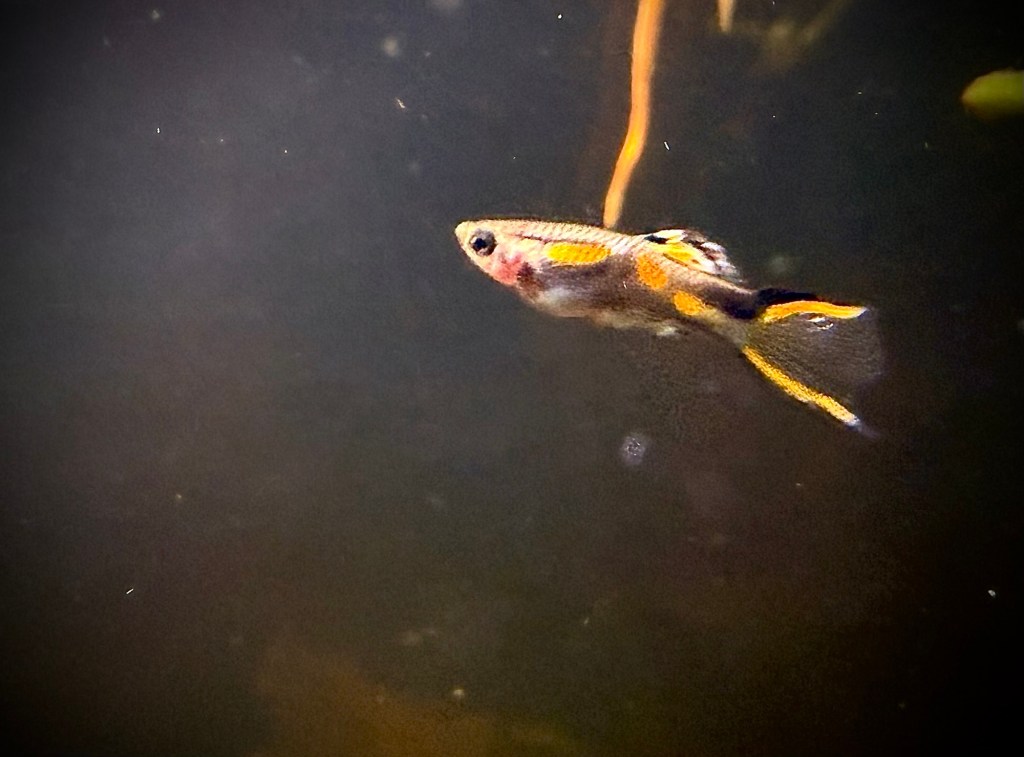
Endlers, or Poecilia wingei, are small livebearing fish closely related to guppies. They are colourful, active, curious and full of life. The males are especially beautiful, with bright flashes of orange, yellow, green and metallic blue depending on the individual. They are not large fish, but they have an energy that makes the whole aquarium feel alive.
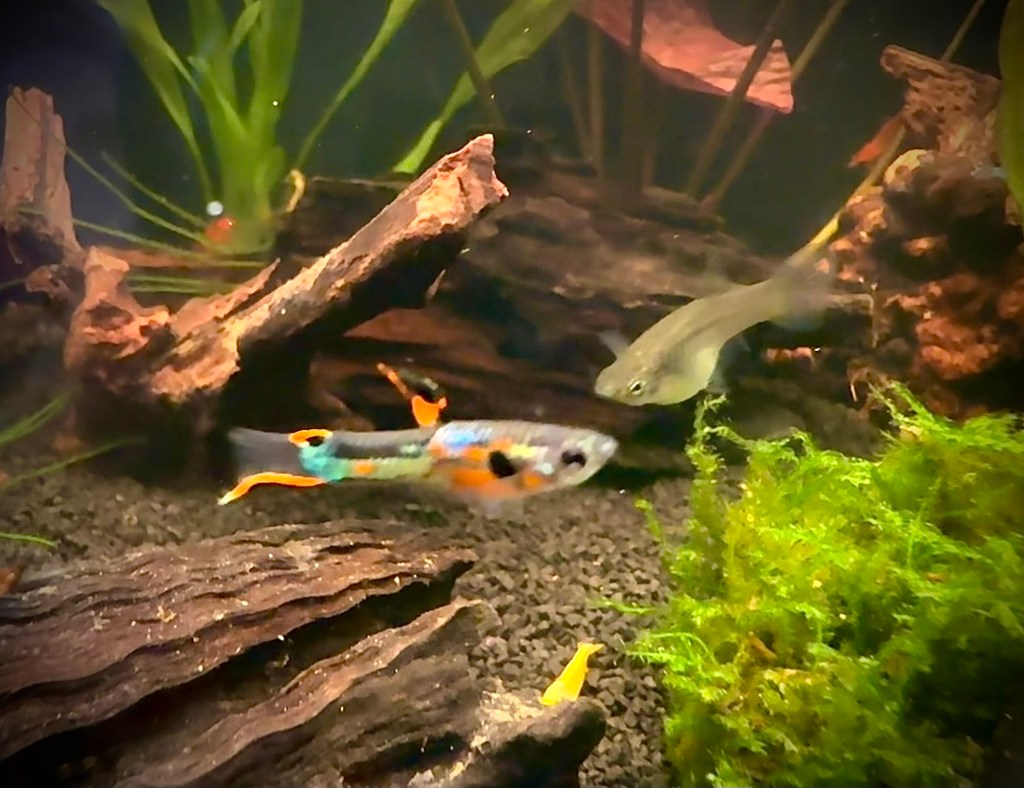
At the moment I have four males and two females. Five of the fish came from a pet store, but there was an interesting story behind them. They had originally been brought in by a person who simply had too many Endlers already. That says quite a lot about this species: when they are happy, they breed easily and quickly. Since the group may have come from the same line, I decided to add one new male from Germany.
My idea was to make the group a little stronger genetically by bringing in a male from a different source. He also looks slightly different from the others, which makes him even more interesting to watch. The original males have more orange in their colours, while the new male’s orange is a little more yellowish. He is still recovering from the journey, but he already looks good and seems to be settling in.
There is something very charming about the natural look of Endlers. Compared with many fancy guppies, they often look smaller, quicker and more wild. Their colours are bright, but not artificial-looking. The males almost sparkle when they turn in the light, and because they are constantly moving, the aquarium never feels still.
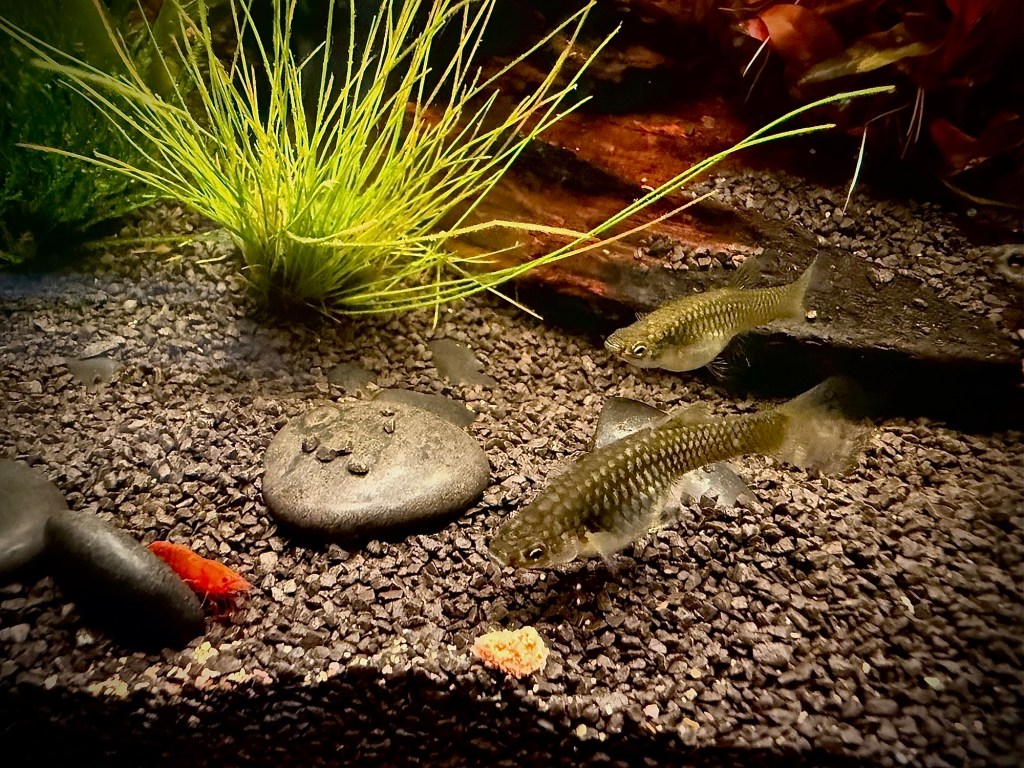
The females are less colourful, but they are just as important to the life of the aquarium. They are larger and rounder than the males, and in my case, they seem to have arrived with a surprise already developing. The first baby is proof that they were probably pregnant before they even entered the tank.
Seeing a fry in such a young aquarium makes me both excited and careful. Baby Endlers are tiny, and in a community aquarium not every fry will survive. Dense plants, floating plants, mosses and roots give them hiding places. Luckily, this aquarium already has plenty of plant life, and that may give the little one a chance.
Endlers are a wonderful choice for a planted aquarium. They stay small, they are peaceful, and they spend their time exploring all levels of the tank. They are especially beautiful in a natural-looking setup, where plants, wood, snails and shrimp all create the feeling of a small living pond.
For me, this is exactly the kind of aquarium life I enjoy most. Not just decoration, but little events happening all the time. A fish settling in after a long journey. A female hiding quietly among the plants. A tiny baby suddenly appearing in open water. These small moments make the aquarium feel like its own world.
I am especially happy that the new male has joined the group. He brings not only a slightly different colour, but also the hope of a stronger and more varied Endler line in the future. His yellowish-orange colour makes him stand out from the others, and I am looking forward to seeing how he looks once he has fully recovered and feels at home.
The first Endler baby has made this aquarium feel alive much faster than I expected. Less than a week in, and already there is a new generation swimming among the plants. For such a tiny fish, it has brought a huge amount of joy.
This is one of the reasons I love aquariums. You prepare the tank, add the plants, introduce the fish — and then nature begins to surprise you.

