Some aquarium animals are carefully planned and researched for weeks before they are introduced to a tank. Others simply arrive, settle in, and before you know it, they have become a major part of the aquarium. My Pink Posthorn Snails definitely belong to the second category.
I originally bought just a couple of these beautiful little snails. They immediately seemed perfectly at home in the aquarium, and I quickly discovered that they are anything but boring. Pink Posthorn Snails are surprisingly active, constantly travelling across plants, glass, stones and decorations in search of something edible.
There was, however, one thing I underestimated: their enthusiasm for reproduction.
Only a couple of months after introducing the first snails, their population has increased dramatically. There are now little pink snails appearing everywhere. At this rate, I will soon have to take some of them back to the pet shop!
The Pink Posthorn Snail commonly kept in aquariums is a colour form of Planorbella duryi, also known as the Seminole ramshorn. The species belongs to the family Planorbidae, a large group of freshwater snails characterised by their distinctive coiled shells.
Its natural home is rather far away from my aquarium in Finland. Planorbella duryi originates from Florida in the United States, where it inhabits ponds, canals, marshes and other slow-moving or still freshwater environments. It is particularly comfortable in places with plenty of aquatic vegetation, which provides both food and surfaces to explore.
From Florida, however, this little snail has travelled remarkably far. Human activity, especially the aquarium and aquatic-plant trade, has helped spread it beyond its original range. Today, introduced populations can be found in various parts of the world, particularly in warm regions where the climate allows the snails to survive outdoors throughout the year. Its success in new environments says a great deal about how adaptable this small animal can be.
Wild Planorbella duryi are generally much less spectacular in colour than the selectively bred snails available to aquarium keepers. Aquarium strains are available in several colours, and pink is certainly one of the most striking.
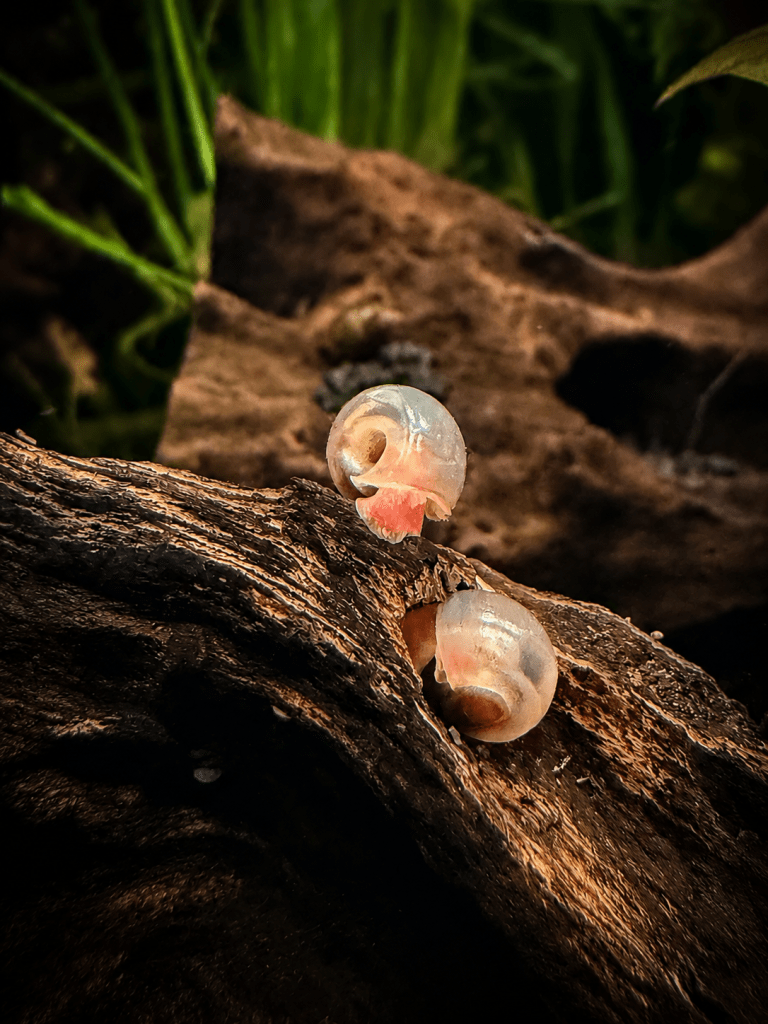
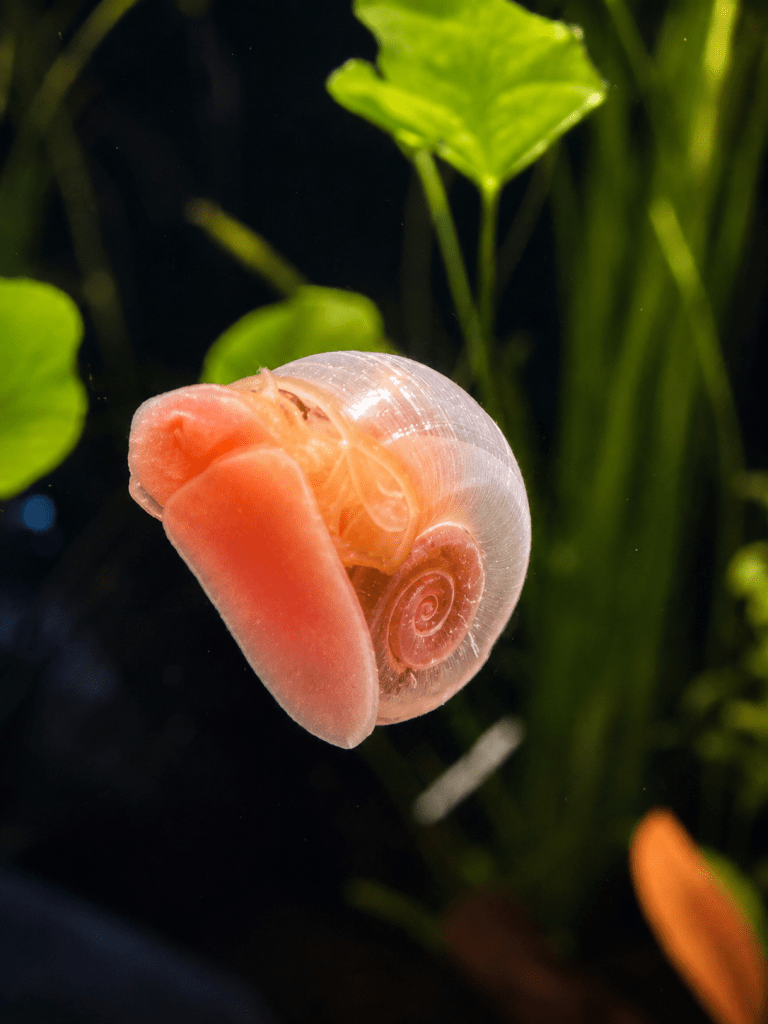
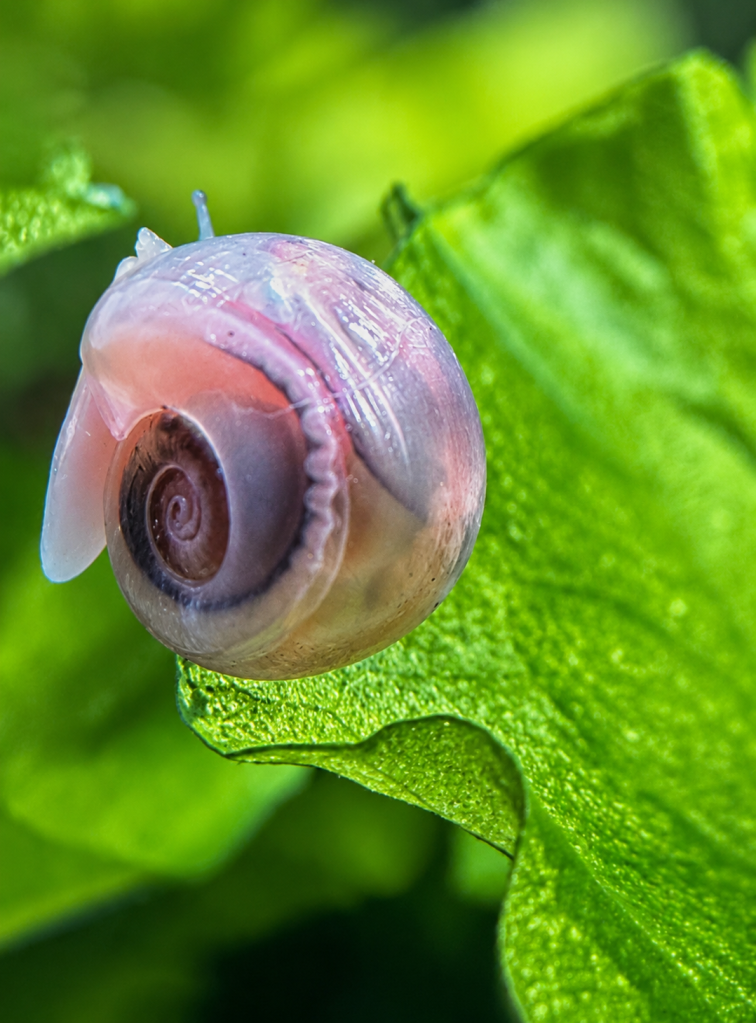
The shell of a Pink Posthorn Snail can be remarkably translucent, especially in young individuals. Much of the beautiful pink appearance actually comes from the animal itself showing through the pale shell. Under aquarium lighting, some individuals can look almost pearly white, with wonderful shades of pink and red underneath.
The characteristic shell is coiled more or less in a single plane, creating the familiar ram’s-horn appearance that gives these snails their English name. Young snails are absolutely tiny, and their almost transparent shells can make them surprisingly difficult to spot at first. Once you know what to look for, however, you suddenly start seeing them everywhere.
One of the things I like most about these snails is their activity. Mine seem to be moving almost constantly. They travel across leaves, climb the aquarium glass and investigate virtually every surface available to them. For such a small and seemingly simple animal, they are surprisingly entertaining to watch.
Their behaviour also makes them useful members of an aquarium’s clean-up crew. Pink Posthorn Snails feed on algae, biofilm, detritus, decomposing plant material and leftover food. They are particularly good at finding tiny scraps that fish have missed. Naturally, they do not replace normal aquarium maintenance, but they certainly participate in recycling organic material.
They are generally peaceful inhabitants and pay little attention to fish, shrimp or other snails. Healthy aquarium plants are usually left alone when enough other food is available, although dying and damaged leaves are eagerly investigated.
And then there is reproduction.
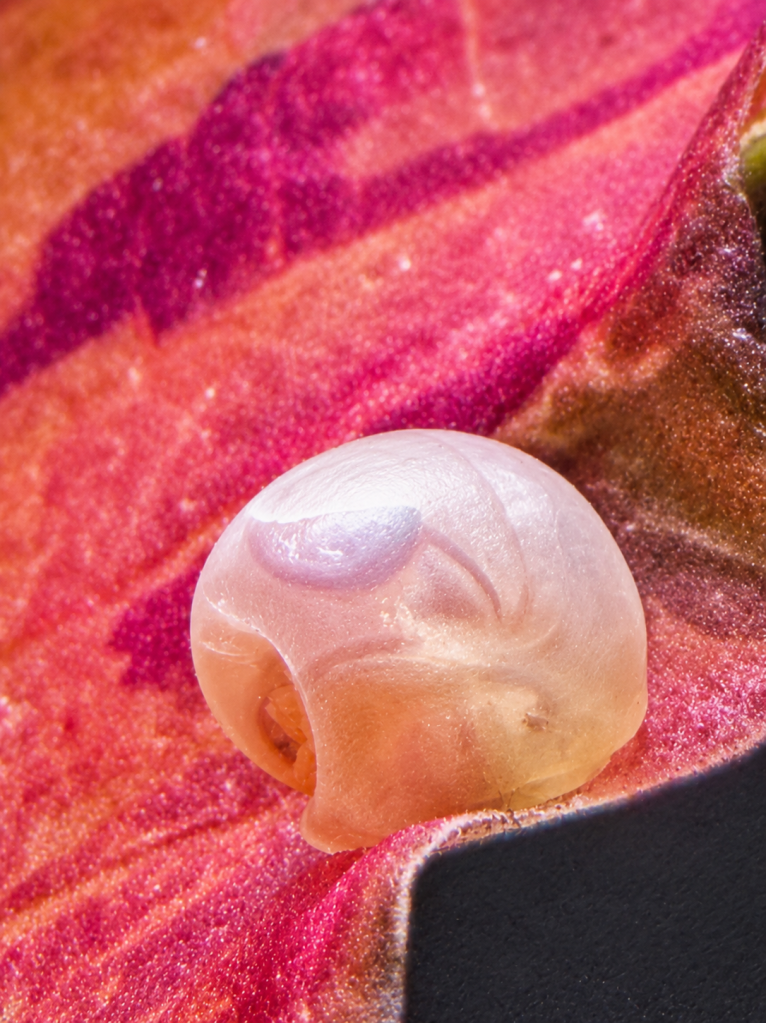
Pink Posthorn Snails can reproduce extremely efficiently when conditions are favourable. They are hermaphrodites, meaning that each individual possesses both male and female reproductive organs. After mating, they deposit small clusters of eggs inside transparent, jelly-like masses. These can appear on plant leaves, glass, decorations and almost any other suitable underwater surface.
Eventually, miniature versions of the adults emerge from the eggs and begin their lives in the aquarium. Given enough food, these youngsters can grow quickly, and before long the next generation is capable of reproducing as well.
The amount of available food has a major influence on how large the population becomes. An aquarium with plenty of leftover fish food, algae and other edible material can support an astonishing number of snails. A sudden population explosion can therefore also be a useful indication that there is plenty of food available in the tank.
I can now confirm their reproductive abilities from personal experience.
When I bought my first couple of Pink Posthorn Snails, I certainly wasn’t expecting them to become some of the most successful inhabitants of the aquarium. Yet that is exactly what happened.
In only a couple of months, they have multiplied enormously. Tiny snails appear on leaves and glass, while slightly larger youngsters are already exploring the aquarium alongside the original adults. Apparently, conditions have been very much to their liking.
Soon I will probably have to collect some of them and take them back to the pet shop. There are, after all, limits to how many Pink Posthorn Snails one aquarium needs.
Still, I don’t regret introducing them at all. They are colourful, useful, extremely active and much more interesting to watch than I expected. Their constant exploration gives the aquarium another layer of life.
The Pink Posthorn Snail may be small, but it certainly knows how to make itself at home.
And, apparently, how to invite the entire extended family.

