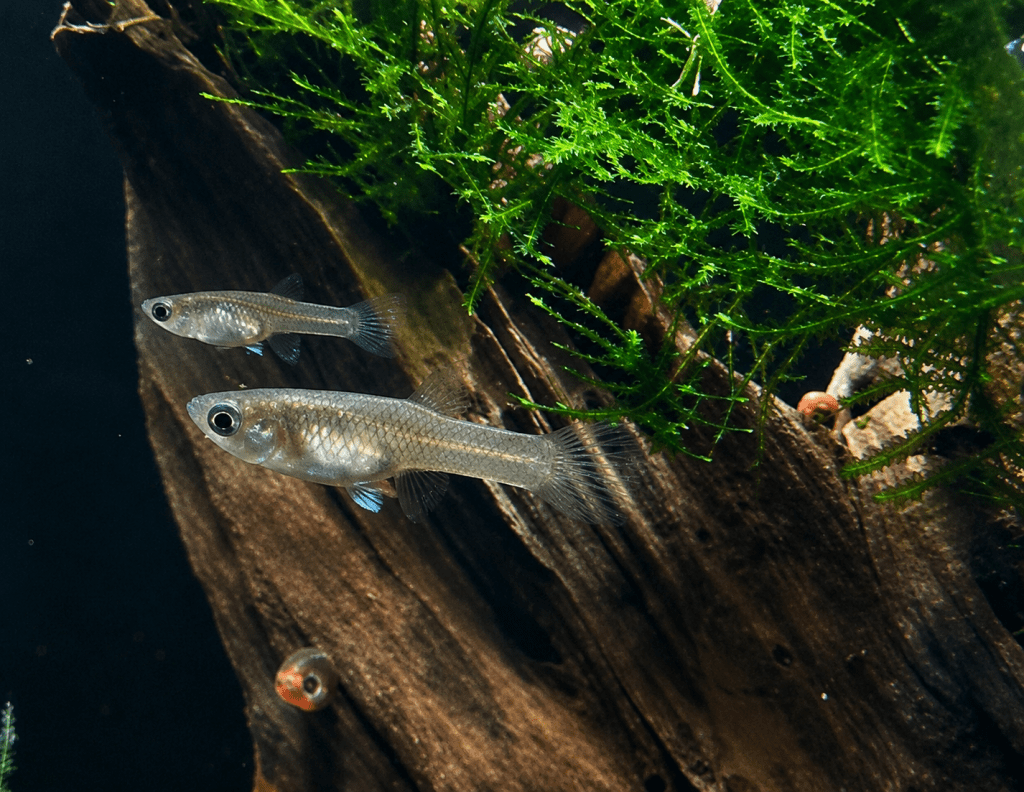
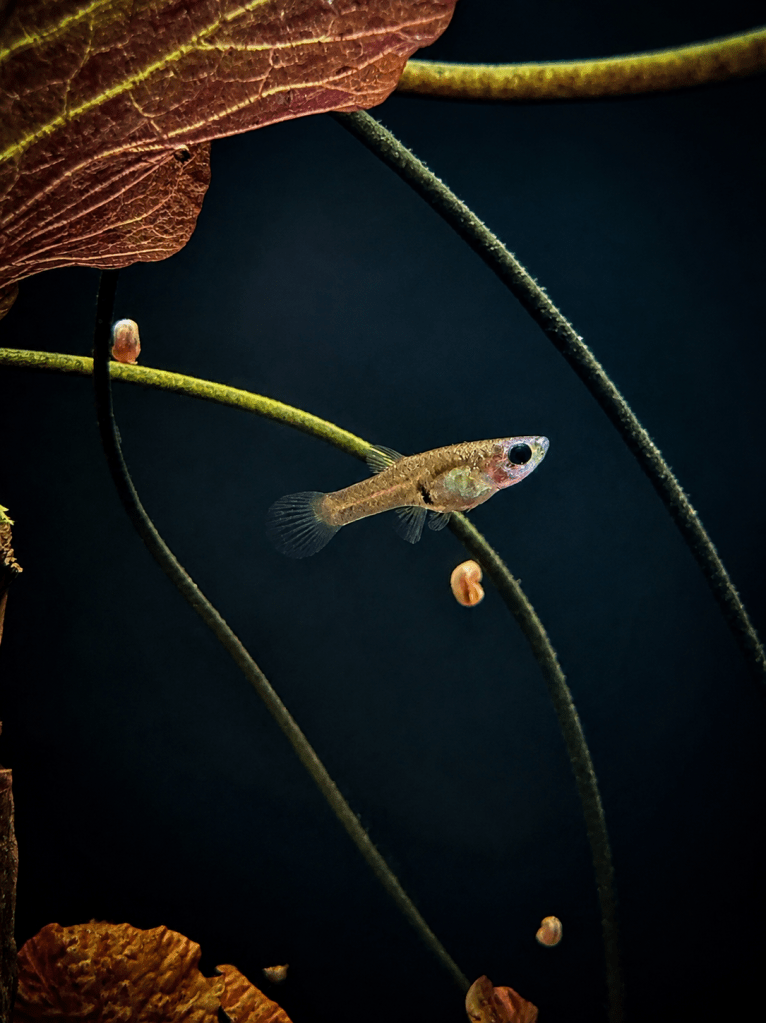
When I first added Endlers (Poecilia wingei) to the aquarium, I knew perfectly well that they were livebearers and that they had a reputation for reproducing rather enthusiastically. Knowing something in theory and watching it happen in your own aquarium, however, are two rather different things.
At the moment, I would estimate that there are somewhere between 30 and 40 young Endlers in the tank. Counting them accurately has become more or less impossible. They are everywhere: among the plants, around the wood, near the surface and, inevitably, gathering with everybody else as soon as food appears. What started with a few tiny fry has turned into what feels like an endless flow of Endlers.
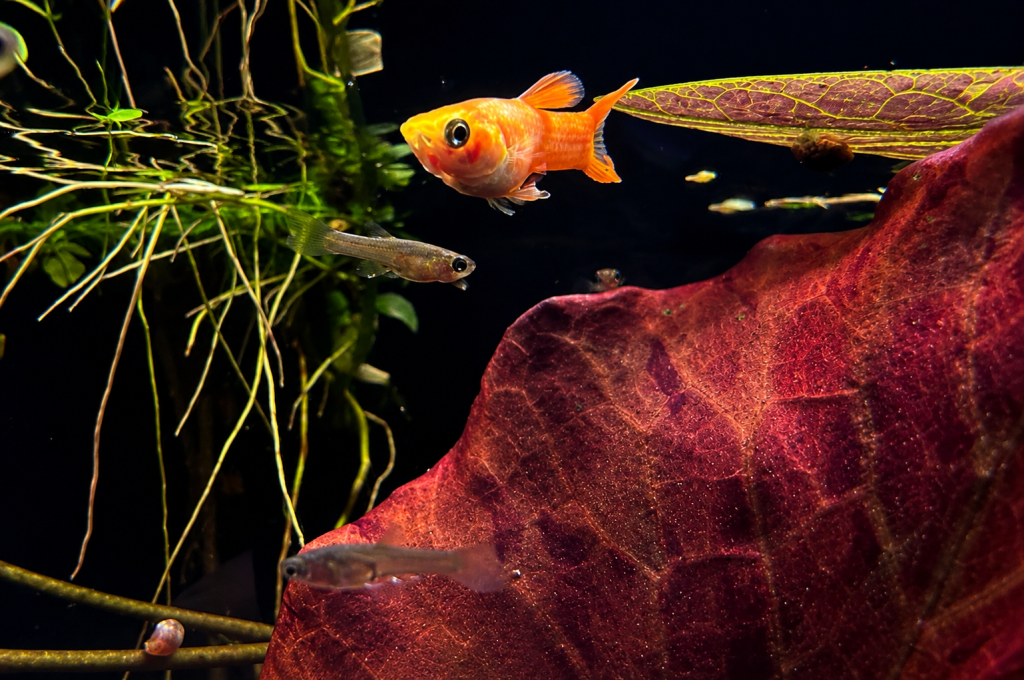
And, rather appropriately, the cycle is already preparing to start again.
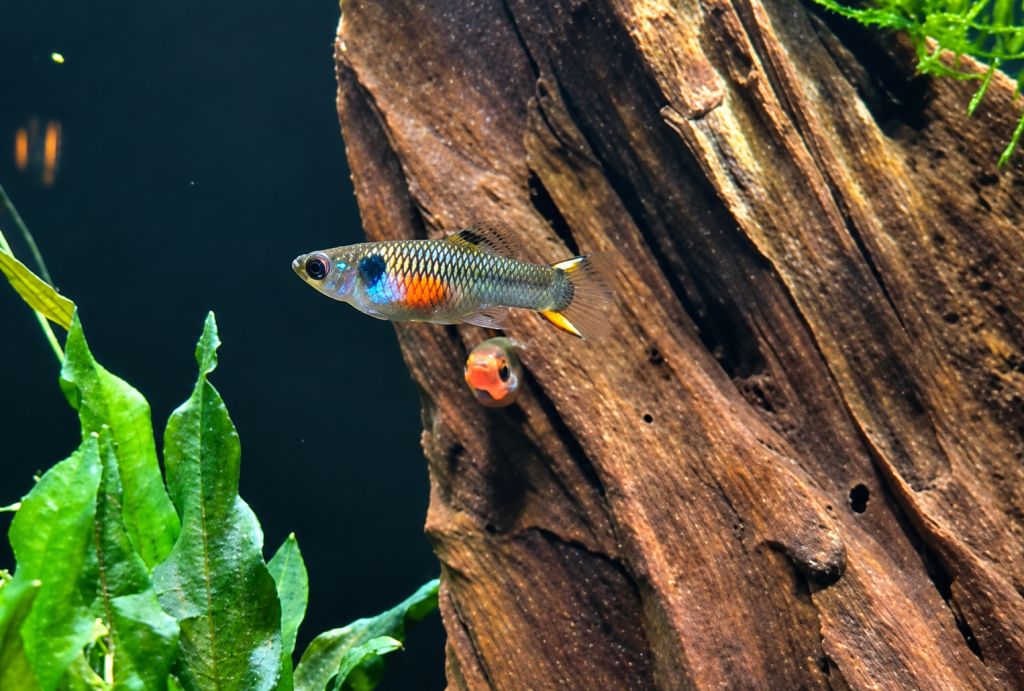
The two oldest youngsters are now approaching adulthood. One is a male, and his colours are beginning to appear properly. They are not completely developed yet, but the transformation is fascinating to watch. For quite a while the young fish all look fairly similar – small, silvery and rather understated – and then suddenly patches of colour begin to emerge. My oldest young male is now starting to look unmistakably like an Endler rather than simply a juvenile fish.
The other older youngster is a female. She too is getting close to adult size, which means it probably will not be very long before the first generation born in this aquarium starts producing the next generation. Considering how many fry I already have, this is both interesting and slightly alarming.
There is another reason why I am particularly curious to see what the next generations will look like.
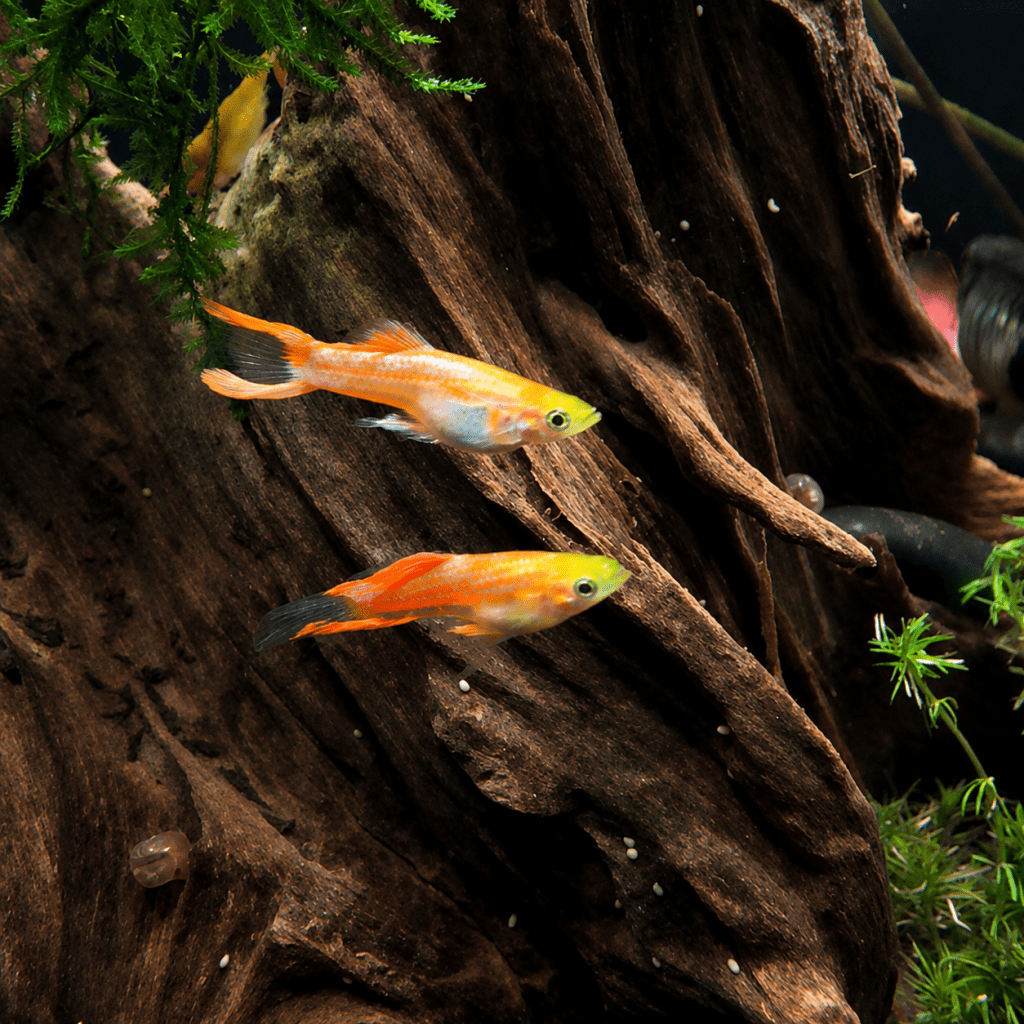
About a month ago, I bought two additional male Endlers. I deliberately chose males that looked completely different from the ones I already had. Rather than trying to keep one particular colour strain going, I thought it would be much more interesting to introduce something visually different and simply see what happens.
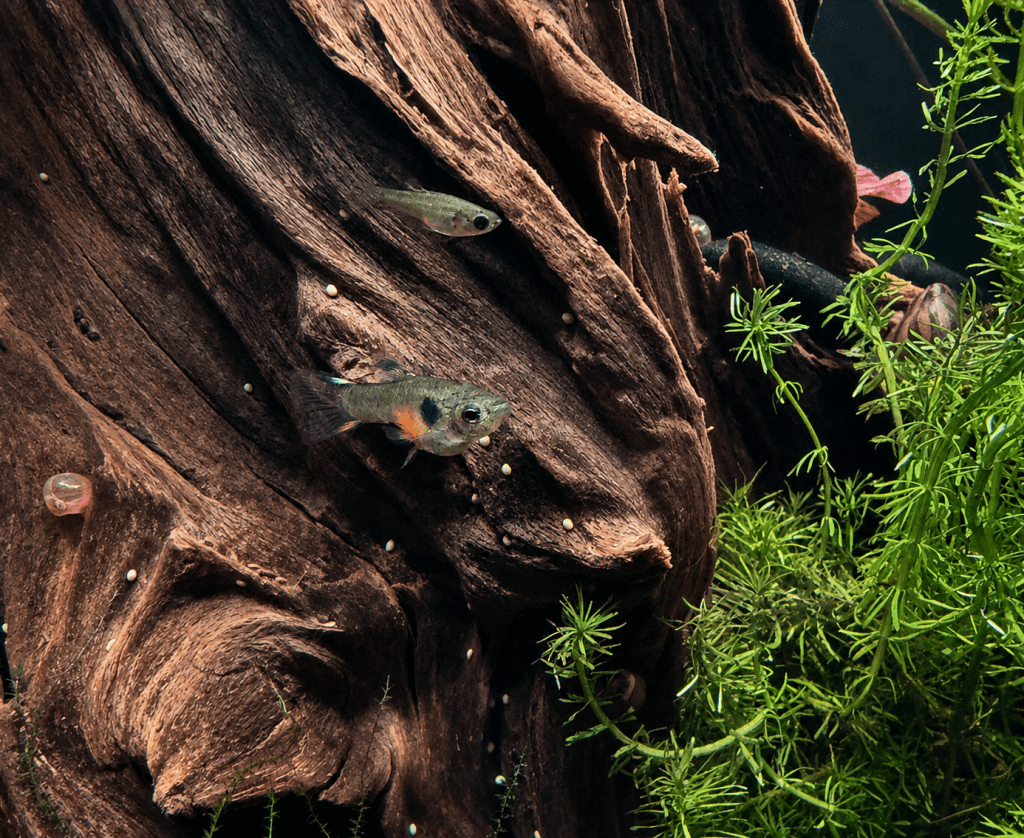
That is one of the things I enjoy about this aquarium. Not everything needs to have a predetermined result. With the different males now contributing their colours and patterns, I have no idea what combinations will eventually appear among the youngsters. Some may resemble the original males, some may take after the newcomers, and others may end up somewhere in between. Watching those colours gradually reveal themselves should be rather fun.
For now, though, most of the younger generation are still very much babies. The size differences between the oldest and youngest fry are becoming quite noticeable, and the aquarium contains Endlers at almost every stage of development. Fortunately, they all seem to be doing extremely well. They are active, feeding enthusiastically and making very good use of the plants and all the little spaces around the wood.
Of course, there is a practical side to all this success.
A 50-litre aquarium has its limits, and 30–40 young Endlers cannot simply grow into adults and remain here indefinitely. I suspect that within the next month I will have to take the first group back to an aquarium or pet shop, where they can hopefully find new and rather more spacious homes.
They probably will not be travelling alone.
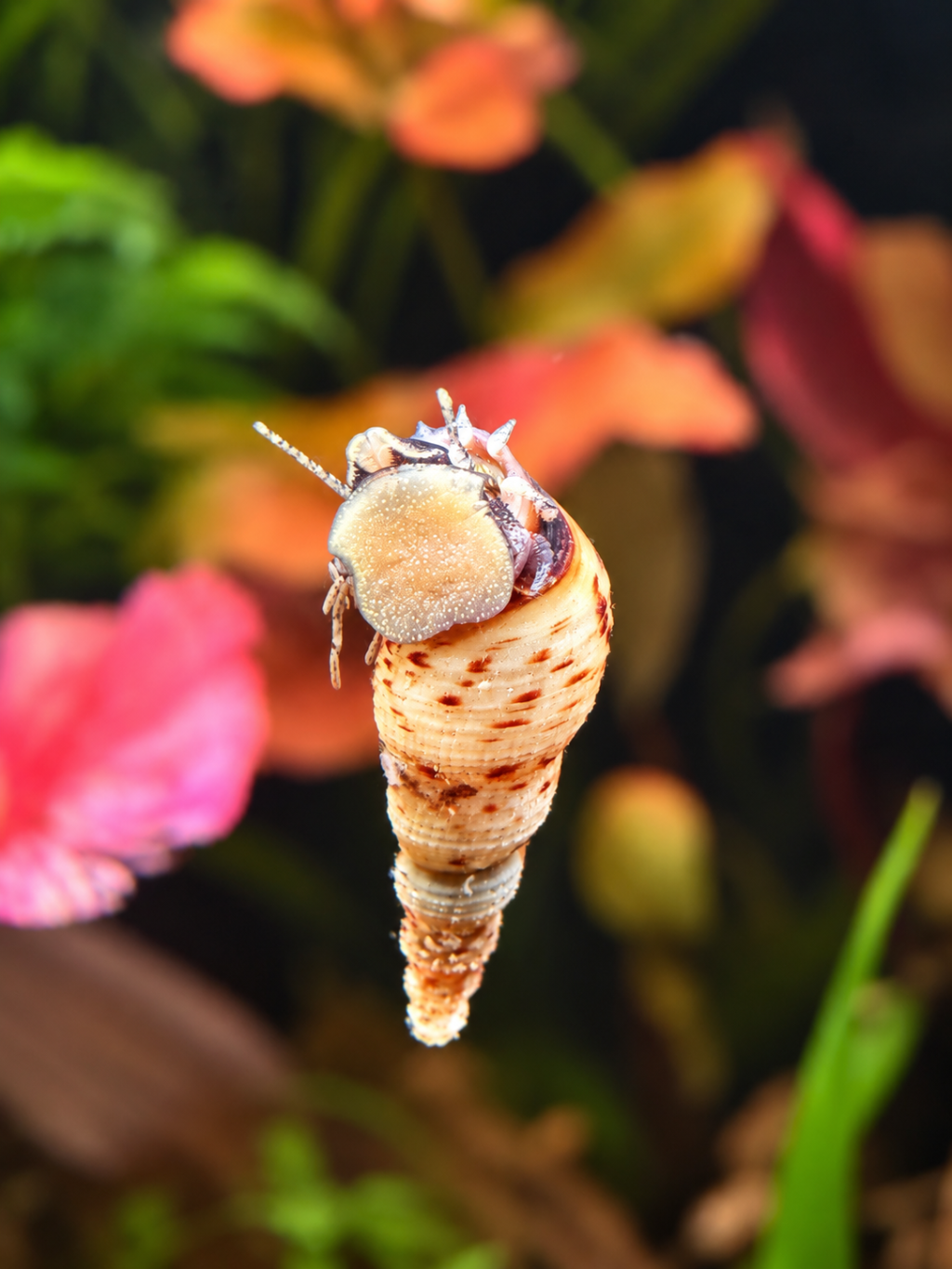
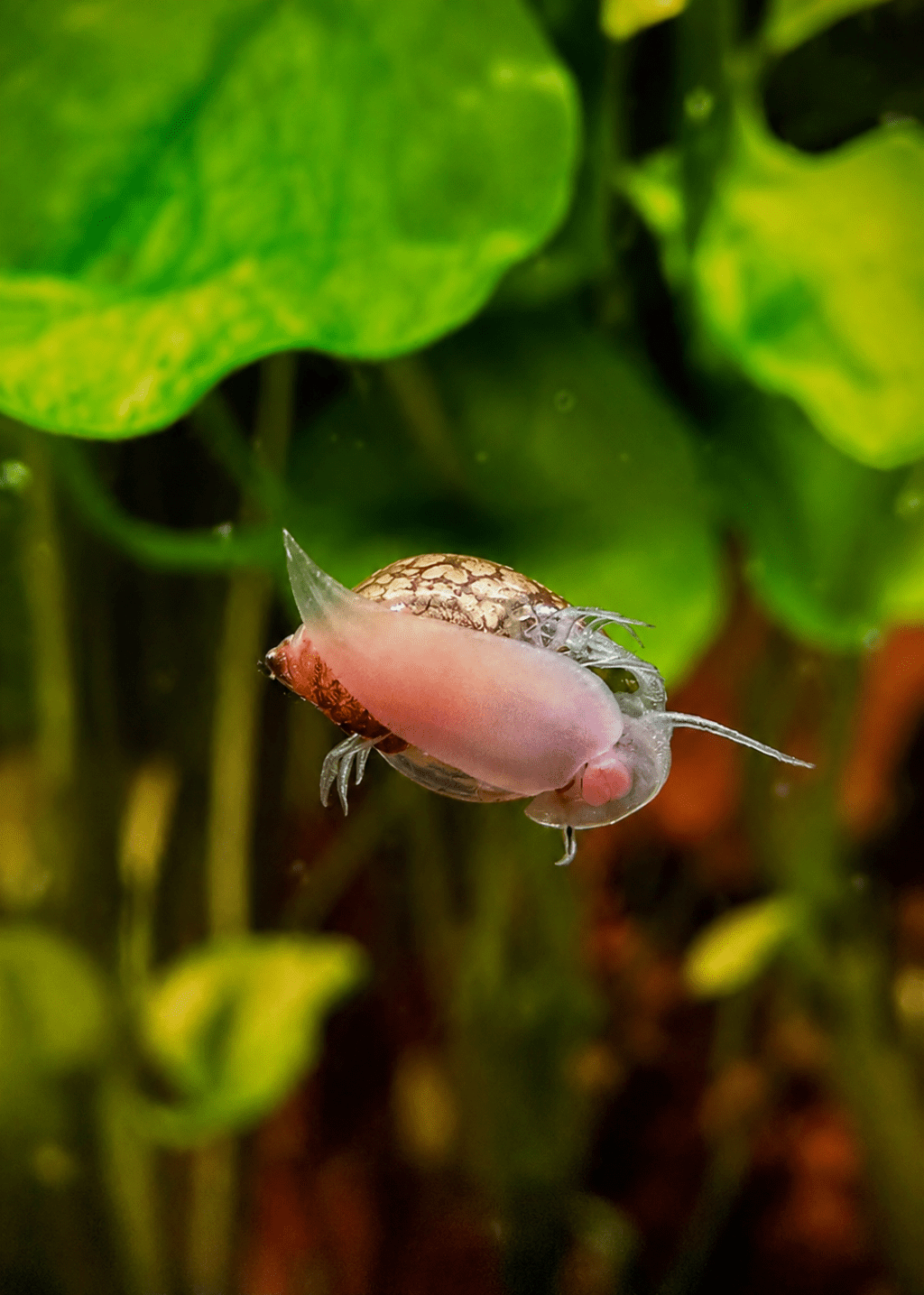
My pink posthorn snails (Planorbarius corneus) have apparently adopted exactly the same philosophy towards reproduction. I originally bought only two of them, but they have multiplied remarkably quickly. So when the first Endlers leave, I expect a number of pink posthorns will be going with them.
It is rather amusing that two of the smallest inhabitants of the aquarium have turned out to be its most successful breeders.
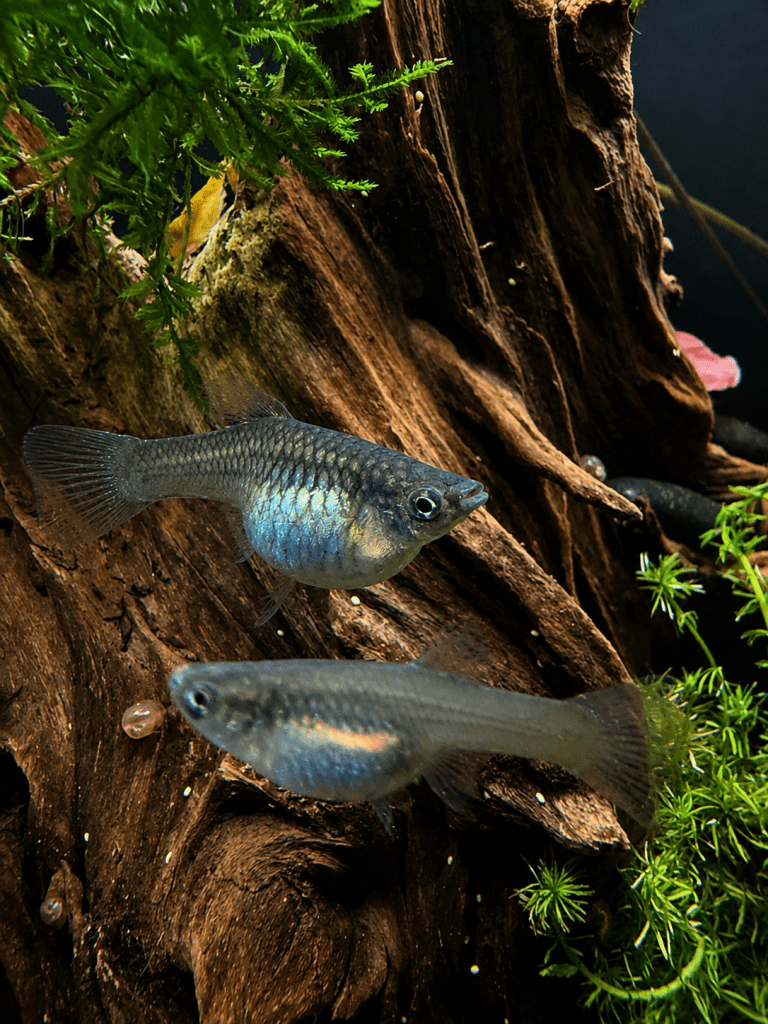
For the moment, though, I am enjoying watching the young Endlers develop. In particular, I want to see how that oldest male looks when his colours have fully appeared – and, after introducing those two very different males, what surprises the next generation might bring.
The endless flow of Endlers, it seems, has only just begun.


Leave a Reply