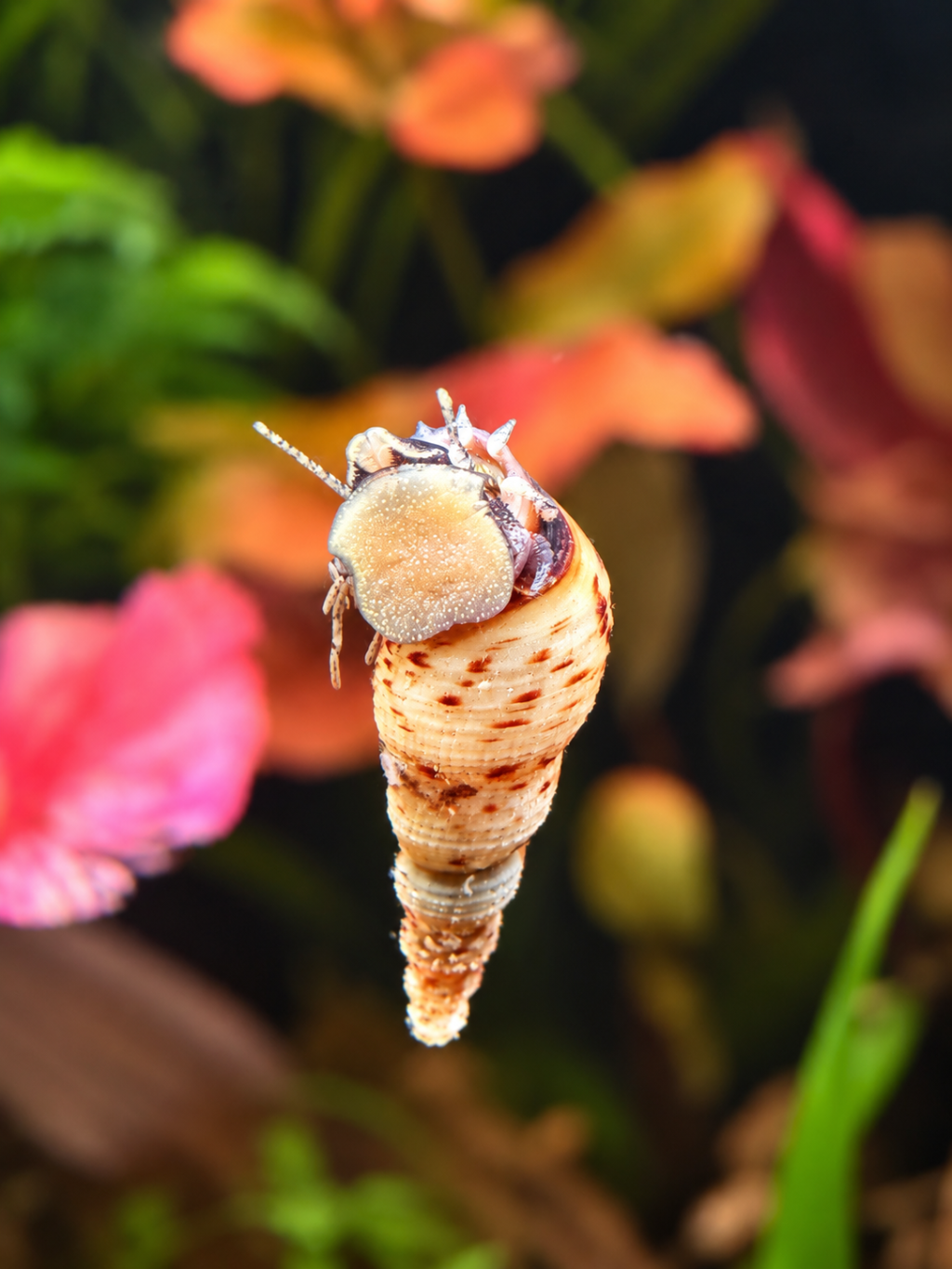
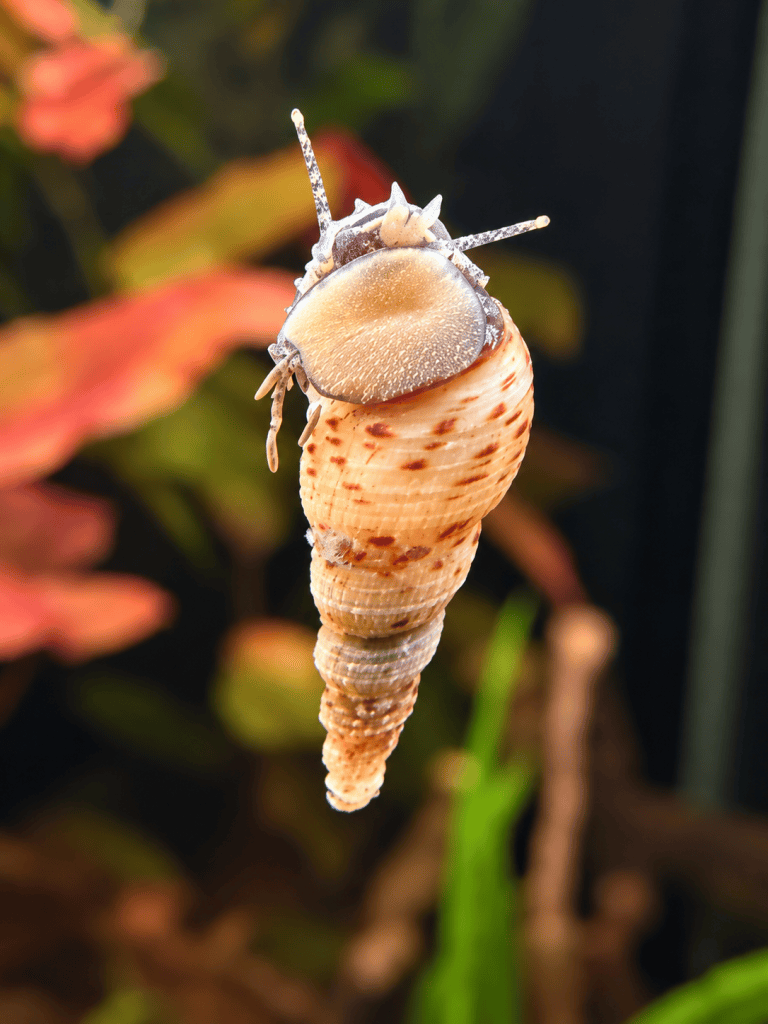
It has been a while since I last wrote about what has been happening in the Little Pond in the North. The aquarium, of course, has not been quite as quiet as the blog. Life has carried on behind the glass, and now there is a particularly lovely reason to write again.
My three rabbit snails have had their first baby.
I have had the three Tylomelania for some time now, and they have gradually become some of my favourite inhabitants of the aquarium. They are certainly not the most energetic creatures in the pond. Most of the time they seem perfectly content to wander slowly around the bottom, investigate a piece of wood or stone, disappear somewhere for a while and then turn up again in a completely different corner of the tank.
And now there are four.
Finding the baby was one of those wonderfully simple aquarium moments. You look into the tank expecting to see more or less what you saw yesterday, and suddenly there is something new. In this case, a very small rabbit snail.
After around forty years of keeping aquariums, I still find moments like this surprisingly exciting. Perhaps that is one of the reasons the hobby never really becomes boring. You can know your aquarium very well and still discover something unexpected during an ordinary look through the glass.
There is also something particularly satisfying about seeing animals reproduce in an aquarium. I always take it as an encouraging sign. The three adults are doing well, behaving normally and apparently finding their surroundings comfortable enough to start a family.
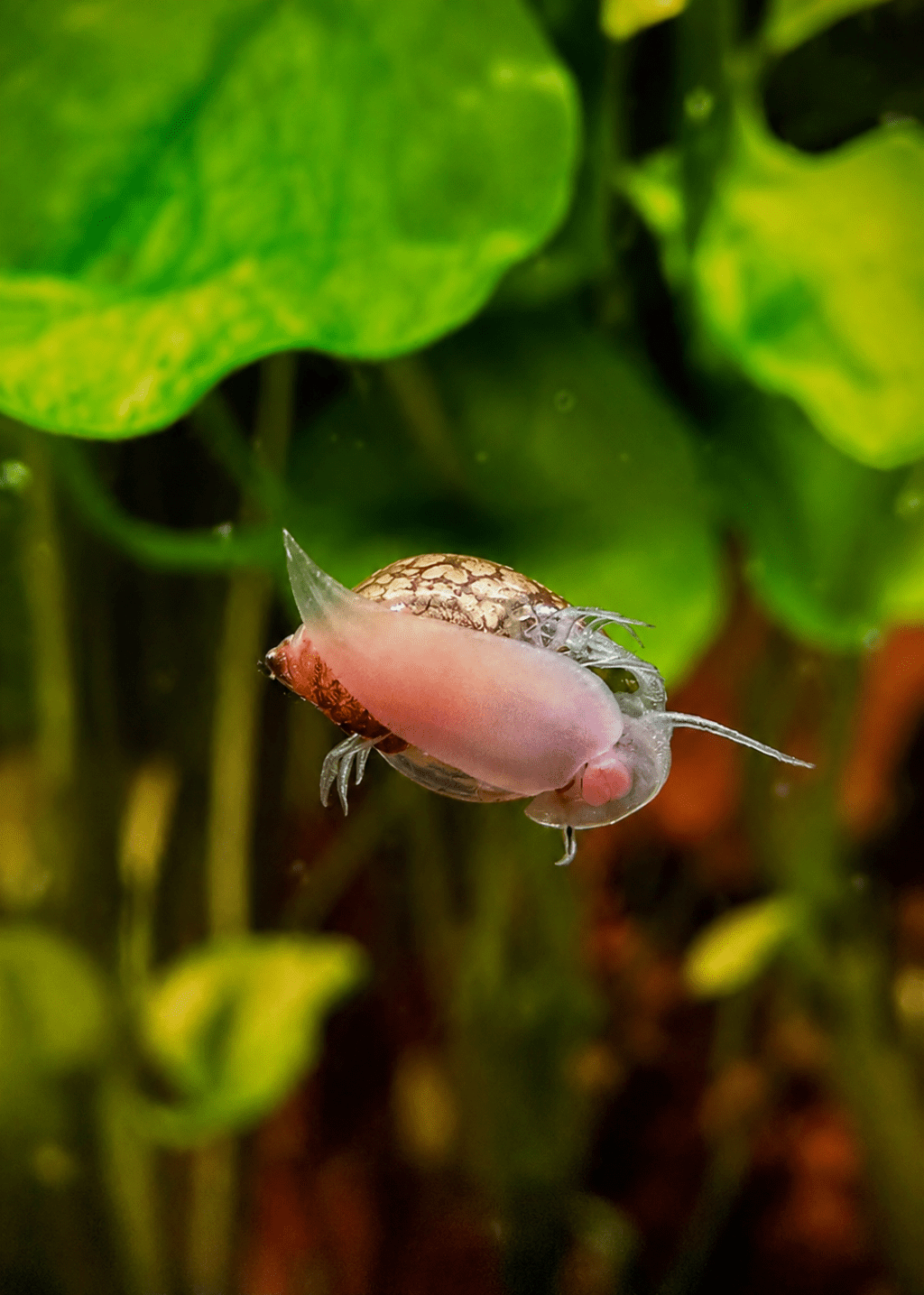
With rabbit snails, one baby also feels rather more significant than it might with some of the other snails in the Little Pond. My pink ramshorn snails have already demonstrated that population growth can be approached with considerably more enthusiasm. Rabbit snails take a much more measured approach to family planning.
Rabbit snails belong to the genus Tylomelania and originate from Sulawesi in Indonesia, where different species and forms inhabit freshwater environments, particularly the ancient lakes of the island. They have become popular aquarium inhabitants because of their unusual appearance, peaceful nature and fascinating behaviour.
Unlike many familiar aquarium snails, they do not produce large clusters of eggs. Rabbit snails are live-bearing and reproduce slowly, with females normally producing only a small number of young at a time, often just one. The youngster arrives looking very much like a miniature version of the adults. So finding one tiny new snail is actually quite an event.
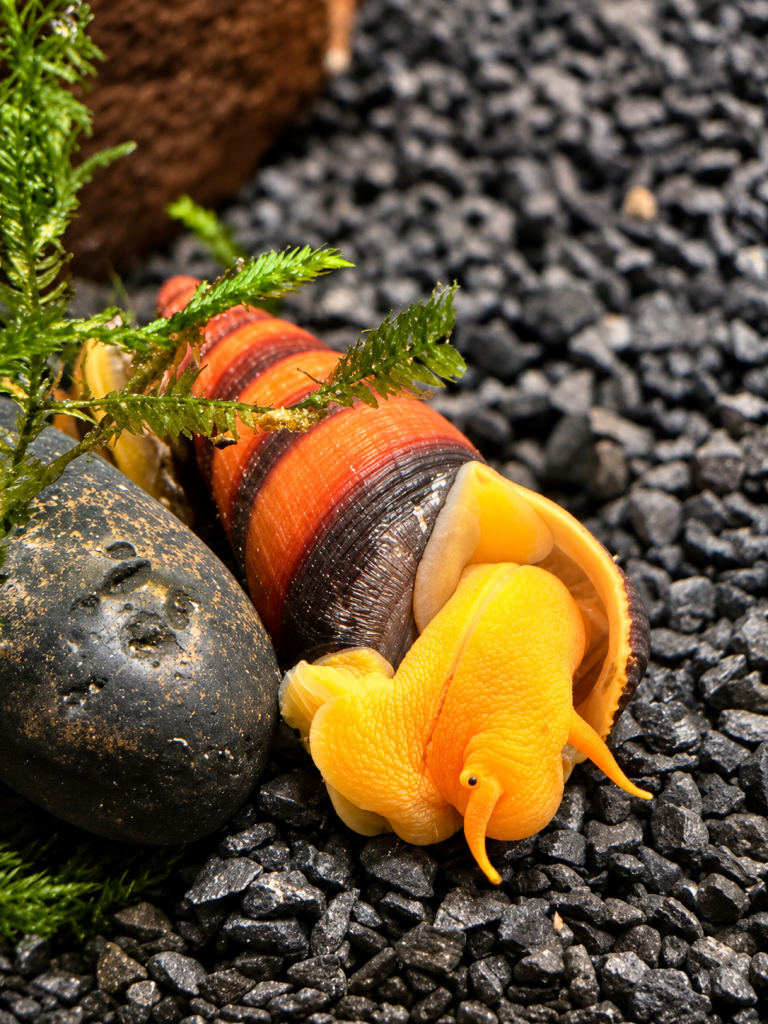
The shells are impressive, of course. They are long, conical and heavily textured, giving the snails an almost prehistoric appearance. But for me, the most striking feature of mine has always been the colour of their bodies.
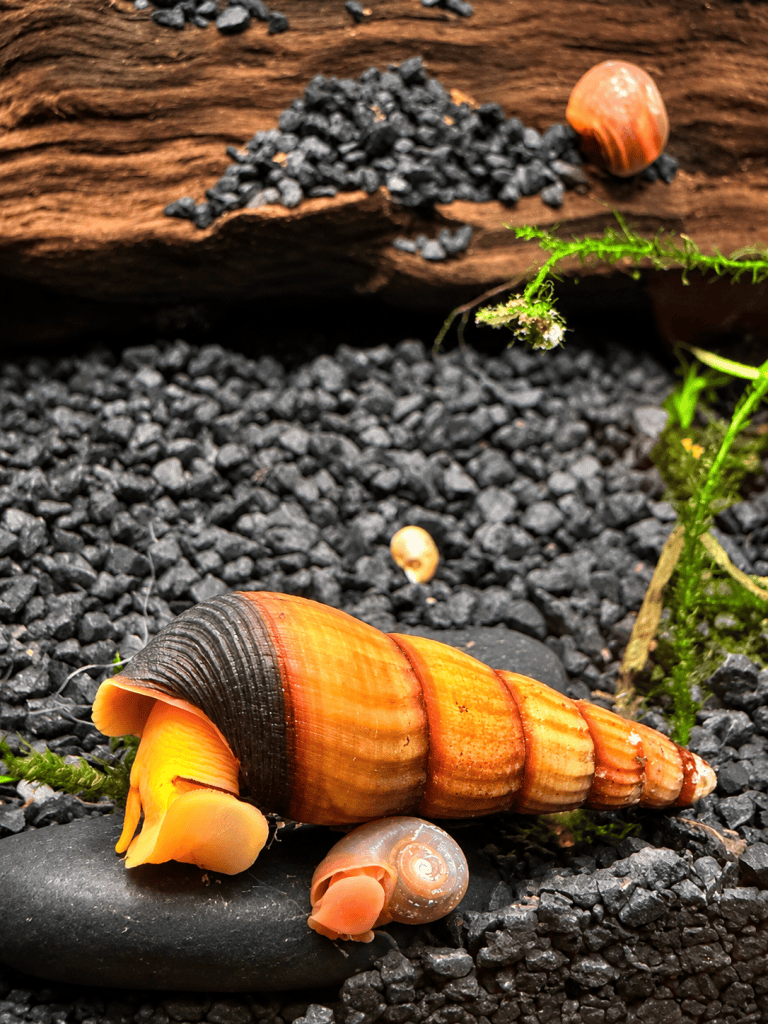
They are astonishingly yellow.
Against the darker substrate and wood in the aquarium, that bright yellow-orange colour really stands out. When one of the adults is fully extended and moving across the bottom, the contrast between the dark shell and the almost glowing body makes it difficult not to stop and watch for a while.
Their faces help too. With the elongated head and extended tentacles, it is not difficult to understand how rabbit snails acquired their common name. Viewed from the right angle, there is something slightly comical and very appealing about them. They also seem to have mastered the remarkable ability to look extremely busy while travelling almost nowhere.
Most importantly, all three adults continue to look healthy and settled. They are wonderfully peaceful animals and spend their days slowly exploring the aquarium without bothering anybody else. That calm nature is probably one of the things I enjoy most about them.
Fish naturally attract attention because they are colourful and constantly moving. The rabbit snails provide a completely different sort of entertainment. You have to slow down a little to watch them.
And sometimes, when you do, you discover that something has changed.
For quite some time there were three rabbit snails slowly wandering around the Little Pond in the North.
Now there are four.
Welcome to the pond, little one.



Leave a comment